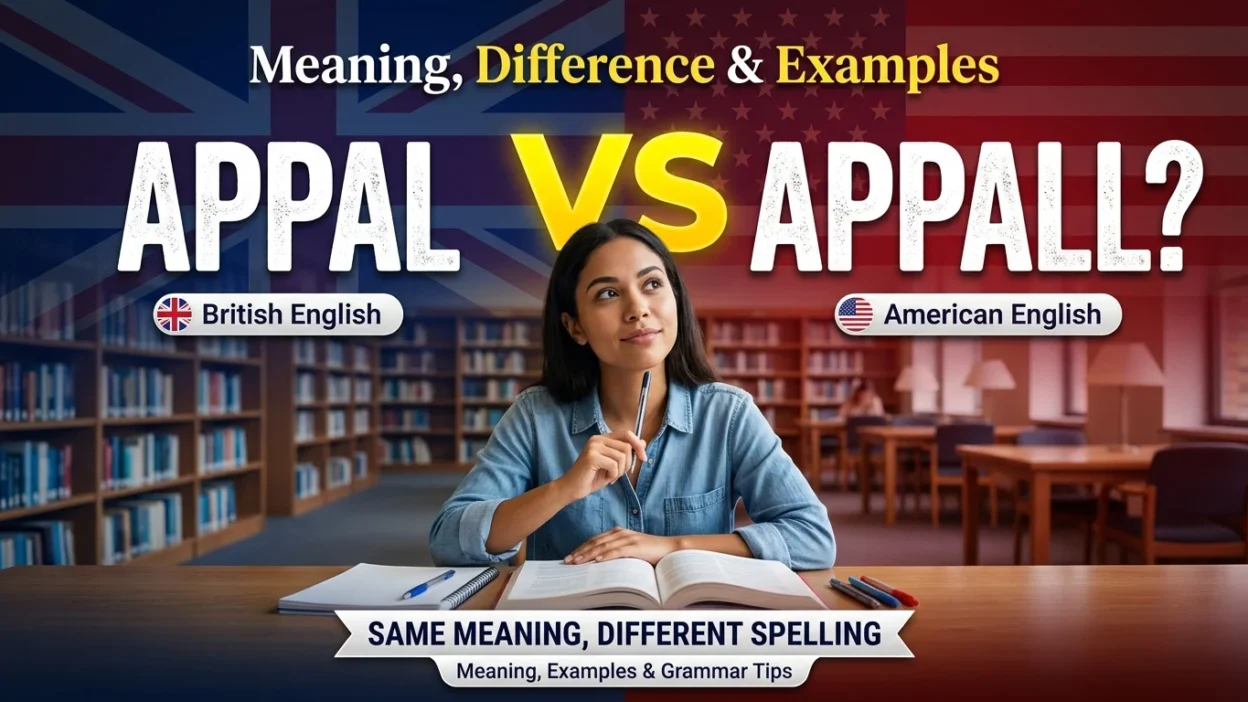
The words appal and appall have the same meaning, but their spelling depends on the variety of English you use. Both verbs mean to shock, horrify, or deeply upset someone because something is extremely unpleasant, cruel, or unacceptable. For example, you can say, “The cruelty of the act appalled everyone.”
If you have wondered if appal or appall is correct, the answer is that both spellings are acceptable. Appal is commonly used in British English, while appall is the preferred spelling in American English. The difference is not in their meaning or pronunciation but in their spelling conventions. Both words can describe strong feelings of shock, horror, or dismay.
In this guide, you will learn why people confuse appal and appall, when to use each spelling, how they appear in sentences, and how to avoid common spelling mistakes. These simple explanations and practical examples will help you choose the right form for your writing.
Quick Answer: Appal or Appall?
Appal and appall are two spellings of the same verb, meaning to shock, horrify, or greatly dismay someone. Appal is the usual British English spelling, while appall is standard in American English. Neither spelling is inherently incorrect; choose the version that matches your audience and remain consistent.
Why Do People Confuse Appal and Appall?
People confuse these words because they have the same meaning and pronunciation. The only difference is the number of letters l at the end of the word.
English uses different spelling conventions in British and American English. Some words ending in a single l in British English are written with a double l in American English, although this pattern does not apply to every word.
For example:
- British English: appal
- American English: appall
Both spellings are correct in their respective varieties of English. The confusion usually occurs when writers are unsure which spelling convention to follow.
What Does Appal Mean?
Appal is a verb that means to shock, horrify, or deeply upset someone. It describes a strong emotional reaction to something disturbing, cruel, frightening, or morally unacceptable.
It is especially useful when you want to express more than ordinary surprise or disappointment.
Examples of Appal in Sentences
- The news of the tragedy appalled the entire community.
- The judge was appalled by the defendant’s cruel behavior.
- The conditions in the abandoned building appalled the inspectors.
- It would appal anyone to witness such cruelty.
- The report is likely to appal readers.
In these examples, appal and its grammatical forms describe feelings of shock, horror, or deep dismay.
Different Forms of Appal
The verb appal follows the usual British spelling pattern in its inflected forms.
- Base form: appal
- Third-person singular: appals
- Past tense: appalled
- Past participle: appalled
- Present participle: appalling
Notice that the past tense is appalled, with two ls. This spelling is standard in both British and American English.
What Does Appall Mean?
Appall is a verb that means to shock, horrify, or greatly dismay someone. It is the standard spelling in American English and has exactly the same meaning as appal.
Use appall when writing for an American audience or following American spelling conventions.
Examples of Appall in Sentences
- The violence in the film appalled many viewers.
- His disrespectful comments appall his colleagues.
- The discovery of the abandoned animals appalled the volunteers.
- The decision appalled everyone in the room.
- The level of corruption continues to appall citizens.
Each example describes a strong negative emotional response to something shocking or unacceptable.
Different Forms of Appall
The American spelling follows these forms:
- Base form: appall
- Third-person singular: appalls
- Past tense: appalled
- Past participle: appalled
- Present participle: appalling
Although the base forms differ between British and American English, the past tense, past participle, and present participle are spelled the same way.
Appal vs. Appall: Comparison Table
| Feature | Appal | Appall |
|---|---|---|
| Meaning | To shock or horrify | To shock or horrify |
| Part of speech | Verb | Verb |
| Common usage | British English | American English |
| Pronunciation | Same | Same |
| Base form | Appal | Appall |
| Third-person singular | Appals | Appalls |
| Past tense | Appalled | Appalled |
| Present participle | Appalling | Appalling |
| Correct spelling? | Yes | Yes |
The main difference between appal and appall is regional spelling preference, not meaning.
When Should You Use Appal or Appall?
Choose the spelling based on your intended audience, publication style, or the spelling convention used throughout your document.
Use Appal in British English
Choose appal when writing in British English, which is commonly used in the United Kingdom and in many other English-language contexts.
Examples:
- The shocking revelation did not fail to appal the public.
- The evidence was enough to appal even experienced investigators.
- Such behavior would appal most reasonable people.
Use Appall in American English
Choose appall when writing in American English.
Examples:
- The shocking revelation did not fail to appall the public.
- The evidence was enough to appall even experienced investigators.
- Such behavior would appall most reasonable people.
Both sets of sentences are grammatically correct. The spelling changes to match the regional convention.
What If You Are Writing for an International Audience?
Either spelling is understandable to most English readers. However, consistency is important.
If your website, school, company, or publication follows American English, use appall. If it follows British English, use appal. Avoid switching between the two spellings without a reason.
Appal vs. Appall: 12 Example Sentences
These examples show how the words work in everyday writing.
- British English: The cruelty of the crime appalled the nation.
- American English: The cruelty of the crime appalled the nation.
- British English: His rude behavior continues to appal his teachers.
- American English: His rude behavior continues to appall his teachers.
- British English: The conditions at the shelter may appal visitors.
- American English: The conditions at the shelter may appall visitors.
- British English: The documentary was intended to appal its audience.
- American English: The documentary was intended to appall its audience.
- British English: I was appalled by the lack of compassion.
- American English: I was appalled by the lack of compassion.
- British English: The shocking figures are appalling.
- American English: The shocking figures are appalling.
Notice that the regional difference appears in the base form and certain related forms, such as appals and appalls. The past tense appalled and the adjective-like participle appalling remain the same.
Common Mistakes to Avoid
Understanding the spelling difference can help you avoid several common errors.
1. Assuming Appal Is Incorrect
Incorrect assumption: “Appal is always a misspelling.”
Correction: Appal is a standard British English spelling.
2. Assuming Appall Is Incorrect
Incorrect assumption: “Appall is not proper English.”
Correction: Appall is the standard American English spelling and is also recognized in dictionaries that cover both varieties.
3. Writing Appaled Instead of Appalled
Incorrect: The audience was appaled by the scene.
Correct: The audience was appalled by the scene.
The past tense uses two *l*s in both British and American English.
4. Writing Appaling Instead of Appalling
Incorrect: The report describes appaling conditions.
Correct: The report describes appalling conditions.
The present participle also requires two *l*s.
5. Mixing British and American Spellings
If you use appal in one paragraph and appall in another, your writing may appear inconsistent.
Choose one spelling convention and apply it throughout your article or document.
Memory Trick: How to Remember Appal vs. Appall
Use this simple memory trick:
- Appal = British English: one l at the end of the base form.
- Appall = American English: two ls at the end of the base form.
You can also remember the difference by thinking of appall as the American spelling with an extra l.
However, remember that both words become appalled in the past tense and appalling in the present participle.
Easy rule: British spelling favors appal, while American spelling favors appall.
American vs. British English: Which Spelling Is Correct?
The distinction between appal and appall is an example of regional spelling variation.
In British English, appal is the preferred base spelling. In American English, appall is standard.
Similar differences occur in other words, although the spelling rules vary from word to word.
| British English | American English |
|---|---|
| Appal | Appall |
| Enrol | Enroll |
| Fulfil | Fulfill |
| Distil | Distill |
| Travelling | Traveling |
These examples illustrate some common regional spelling differences. They do not mean every British word ending in l gains another l in American English.
If you are preparing an academic assignment, professional report, or website article, follow the style guide required by your institution or intended audience.
Similar Words to Appal and Appall
Several words express related feelings, but they differ slightly in intensity and usage.
1. Horrify
To horrify someone means to shock them with something extremely frightening, cruel, or disturbing.
Example: The details of the accident horrified the investigators.
2. Shock
To shock someone means to surprise or upset them greatly, often because something is unexpected.
Example: The announcement shocked the employees.
3. Dismay
To dismay someone means to cause disappointment, worry, or distress.
Example: The sudden cancellation dismayed the students.
4. Disgust
To disgust someone means to cause a strong feeling of revulsion or dislike.
Example: His dishonest behavior disgusted his colleagues.
5. Stun
To stun someone means to surprise or overwhelm them so much that they struggle to react immediately.
Example: The unexpected result stunned the audience.
6. Alarm
To alarm someone means to make them feel frightened, worried, or concerned about a possible danger.
Example: The unusual noise alarmed the residents.
Although these words are related, they are not always interchangeable. Appal and appall are particularly suitable when something causes deep shock, horror, or dismay.
Frequently Asked Questions
1. Is appal or appall correct?
Both are correct. Appal is the preferred spelling in British English, while appall is standard in American English. Both mean to shock, horrify, or deeply upset someone.
2. What is the difference between appal and appall?
There is no difference in meaning or pronunciation. The difference is spelling: appal is commonly used in British English, and appall is standard in American English.
3. Is appal British or American?
Appal is primarily the British English spelling. It is a valid spelling and should not automatically be treated as an error.
4. Is appall American English?
Yes. Appall is the standard American English spelling. It has the same meaning as the British spelling appal.
5. Is appalled spelled with one L or two?
Appalled is spelled with two ls in both British and American English. For example: “We were appalled by the shocking news.”
6. What is the difference between appalled and appalling?
Appalled usually describes how someone feels, while appalling describes something that causes shock or horror.
Examples:
- I was appalled by the news.
- The news was appalling.
7. What is the noun form of appal or appall?
The related noun is appalment, but it is rare. In everyday English, writers usually express the idea using words such as shock, horror, or dismay, depending on the context.
Remember This
- Appal: the preferred British English spelling.
- Appall: the standard American English spelling.
- Meaning: to shock, horrify, or deeply dismay someone.
- Pronunciation: the same for both spellings.
- Past tense: appalled.
- Present participle: appalling.
The easiest way to choose is to identify your audience and follow its spelling conventions consistently.
Conclusion
The difference between appal and appall is simple: both words mean to shock, horrify, or deeply upset someone, but they follow different regional spelling preferences. British English generally uses appal, while American English uses appall. Neither spelling is universally wrong, so the right choice depends on your audience and writing style.
When using either word, remember that the past tense is appalled and the present participle is appalling in both varieties of English. By learning these forms and applying the appropriate spelling consistently, you can write more clearly and confidently. if you choose appal or appall, the meaning remains the same.

John Tyler is a dream researcher and content writer at SleepCout, sharing insightful articles about coded dreams, dream meanings, symbolism, sleep psychology, and practical guidance to help readers understand their dreams.