
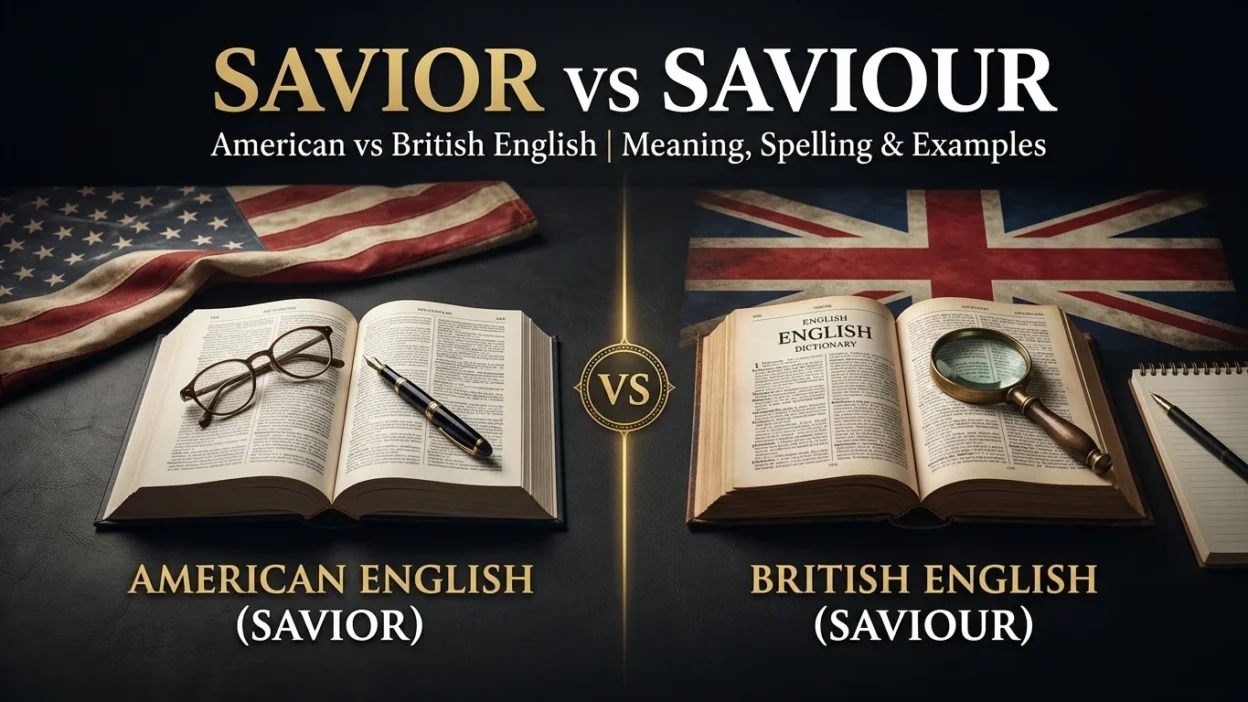
The words savior and saviour have the same meaning, but they differ in spelling. Both refer to a person who saves someone from danger, harm, difficulty, or a serious problem. The main difference is regional: savior is the standard spelling in American English, while saviour is the standard spelling in British English and many other varieties of English.
Choosing between these spellings depends on your audience, location, and writing style. If you are writing for an American audience, use savior. If you are writing for a British, Canadian, Australian, or other international audience, saviour is often preferred, although regional usage can vary.
Understanding this spelling difference can help you write more clearly in school assignments, professional documents, online articles, and everyday communication. Both forms are correct, so you do not need to worry about choosing one as universally right and the other as wrong.
Quick Answer: Savior or Saviour?
Savior is the American English spelling, while saviour is the British English spelling. Both words mean someone who rescues or saves another person from danger, trouble, or harm. Their pronunciation and meaning are essentially the same. Choose the spelling that matches your intended audience and use it consistently throughout your writing.
Why Do People Confuse Savior and Saviour?
People often confuse savior and saviour because the two words have identical meanings and are pronounced the same way in ordinary English.
The only difference is the letter u. American English generally omits the u in several words where British English retains it, such as color/colour, honor/honour, and favor/favour.
The same spelling pattern applies to savior/saviour.
For example:
- American English: The firefighter became a hero and a savior.
- British English: The firefighter became a hero and a saviour.
Both sentences are correct. The choice depends on the spelling convention you follow.
What Does Savior Mean?
Savior is a noun that describes someone who saves, rescues, or delivers another person from danger, suffering, difficulty, or destruction.
It is the standard American English spelling.
Examples of Savior in Sentences
- The lifeguard was the savior of the drowning swimmer.
- Her quick thinking made her a savior during the emergency.
- Many people considered the doctor their savior.
- The rescue team arrived just in time to become the hikers’ saviors.
The word can also have a religious meaning. In Christianity, Savior is commonly used as a title for Jesus Christ, who is believed to save humanity from sin.
Synonyms: rescuer, deliverer, protector, lifesaver, and champion, depending on the context.
What Does Saviour Mean?
Saviour is a noun with exactly the same basic meaning as savior. It refers to someone who rescues, protects, or delivers others from danger or difficulty.
It is the standard British English spelling and is also used in many other English-speaking regions.
Examples of Saviour in Sentences
- The brave woman became the saviour of the trapped children.
- The rescue workers were hailed as saviours after the flood.
- His advice proved to be a saviour during a difficult time.
- The villagers regarded the doctor as their saviour.
In religious writing, Saviour is also commonly used as a title for Jesus Christ, particularly in Christian contexts.
Synonyms: rescuer, deliverer, protector, lifesaver, and guardian, depending on the intended meaning.
Savior vs Saviour: Comparison Table
| Feature | Savior | Saviour |
|---|---|---|
| Main meaning | A person who saves | A person who saves |
| Spelling style | American English | British English |
| Pronunciation | Same | Same |
| Part of speech | Noun | Noun |
| Religious use | Yes | Yes |
| Example | He was our savior. | He was our saviour. |
| Correctness | Correct | Correct |
The essential difference is spelling, not meaning or pronunciation.
When Should You Use Savior or Saviour?
Use the spelling that best matches your audience and the style guide you are following.
When to Use Savior
Choose savior when writing in American English.
It is appropriate for:
- School assignments using American spelling.
- Articles written for readers in the United States.
- American business documents and publications.
- Content following an American English style guide.
Example: The emergency worker became a savior to the injured passengers.
When to Use Saviour
Choose saviour when writing in British English or following a style guide that prefers this spelling.
It is appropriate for:
- British English writing.
- Many publications in the United Kingdom.
- Writing for audiences that prefer British spelling conventions.
- Religious texts and discussions using the spelling Saviour.
Example: The emergency worker became a saviour to the injured passengers.
Remember that English spelling conventions vary by country and publisher. For example, Canadian English often uses British-style spellings, but usage is not uniform in every context.
12 Examples of Savior vs Saviour in Sentences
These examples show how both spellings work in everyday English.
1. American: The firefighter was a savior to the family.
British: The firefighter was a saviour to the family.
2. American: She became the savior of the entire team.
British: She became the saviour of the entire team.
3. American: The doctor was our savior during the crisis.
British: The doctor was our saviour during the crisis.
4. American: They called him their savior after the rescue.
British: They called him their saviour after the rescue.
5. American: The rescue workers acted as saviors during the flood.
British: The rescue workers acted as saviours during the flood.
6. American: His timely advice proved to be a savior.
British: His timely advice proved to be a saviour.
7. American: The community viewed the leader as a savior.
British: The community viewed the leader as a saviour.
8. American: The volunteers were saviors to the displaced families.
British: The volunteers were saviours to the displaced families.
9. American: Many Christians believe Jesus is their Savior.
British: Many Christians believe Jesus is their Saviour.
10. American: The new technology became a savior for the struggling business.
British: The new technology became a saviour for the struggling business.
11. American: The lifeguard was hailed as a savior after the accident.
British: The lifeguard was hailed as a saviour after the accident.
12. American: Sometimes, a kind friend can be your savior in a difficult moment.
British: Sometimes, a kind friend can be your saviour in a difficult moment.
In every pair, the meaning remains the same. Only the spelling changes.
Common Mistakes to Avoid
Although savior and saviour are both correct, writers sometimes make mistakes when choosing between them.
1. Thinking One Spelling Is Always Wrong
Neither spelling is incorrect. Savior is standard in American English, while saviour is standard in British English.
2. Mixing Spelling Styles
Using savior in one paragraph and saviour in another can make your writing look inconsistent.
Better approach: Choose one spelling convention and use it throughout the document, unless you are quoting a source or using an official name.
3. Confusing Spelling With Meaning
There is no meaningful difference between the two words. You do not use savior for one type of rescue and saviour for another.
4. Forgetting the Plural Forms
The plurals are:
- American English: saviors
- British English: saviours
For example, “The rescuers were saviors” and “The rescuers were saviours” are both correct in their respective spelling styles.
5. Using the Word When Another Term Is More Precise
A savior or saviour is someone who saves another person. Depending on the situation, rescuer, lifesaver, or protector may be more specific.
For example, lifeguard identifies a particular role, while savior describes the person’s contribution.
What Is an Easy Way to Remember Savior vs Saviour?
Use this simple memory trick:
- Savior = American English: No u.
- Saviour = British English: Includes u.
Think of the familiar spelling pair color/colour. If you write color, you will generally write savior. If you write colour, you will generally write saviour.
This trick helps you remember the difference without memorizing separate definitions.
American vs British English: Which Spelling Is Preferred?
American and British English follow different spelling conventions for several words, and savior/saviour is one example.
| English variety | Preferred spelling | Example |
|---|---|---|
| American English | Savior | He was their savior. |
| British English | Saviour | He was their saviour. |
| Canadian English | Often saviour | She became a saviour. |
| Australian English | Generally saviour | He was regarded as a saviour. |
Canadian and Australian usage can vary according to the publication or style guide, so follow the relevant standard for formal writing.
If you are writing for an international audience, either spelling can be understood. Consistency is more important than choosing one form for every situation.
Similar Words: Color vs Colour, Honor vs Honour, and More
Savior/saviour belongs to a larger group of American and British spelling differences.
| American English | British English |
|---|---|
| Color | Colour |
| Honor | Honour |
| Favor | Favour |
| Labor | Labour |
| Neighbor | Neighbour |
| Savior | Saviour |
| Humor | Humour |
| Behavior | Behaviour |
These examples follow a common pattern: American English often drops the u found in British English spellings.
However, not every spelling difference follows this rule. It is helpful to learn common word pairs and check a reliable dictionary when you are unsure.
Final Verdict: Savior or Saviour?
Both savior and saviour are correct English spellings with the same meaning.
Use savior for American English and saviour for British English and other contexts where that spelling is preferred.
If you are unsure which one to choose, consider your audience, follow your organization’s style guide, and remain consistent throughout your writing. Neither spelling is inherently better than the other.
Frequently Asked Questions
1. Is savior or saviour correct?
Both are correct. Savior is the standard American English spelling, while saviour is the standard British English spelling. They have the same meaning and pronunciation.
2. Is saviour British or American?
Saviour is primarily associated with British English. It is also commonly used in other English varieties, including Australian English and many Canadian contexts.
3. Is savior American English?
Yes. Savior is the standard American English spelling. It follows the same spelling pattern as color, honor, and favor.
4. Do savior and saviour mean the same thing?
Yes. Both words describe a person who saves, rescues, or delivers someone from danger, harm, or difficulty. Neither spelling has a different definition.
5. How do you pronounce savior and saviour?
Both words are generally pronounced the same way: SAY-vee-er. The exact pronunciation may vary slightly by accent, but the additional u does not create a separate pronunciation.
6. What is the plural of savior and saviour?
The American plural is saviors, while the British plural is saviours. Both refer to more than one person who saves or rescues others.
7. Should I capitalize Savior or Saviour?
Capitalize the word when it begins a sentence or forms part of a title or proper name. In Christian contexts, Savior or Saviour is often capitalized when referring specifically to Jesus Christ. Otherwise, use lowercase when the word is a general noun.
Remember This
- Savior: American English.
- Saviour: British English.
- Meaning: The same in both spellings.
- Pronunciation: Essentially the same.
- Best practice: Match your audience and keep your spelling consistent.
Conclusion
The difference between savior and saviour is simple: one follows American English spelling conventions, and the other follows British English conventions. Both describe someone who saves or rescues another person from danger, suffering, or difficulty. Neither word is wrong, and both are widely understood.
When writing an article, email, school assignment, or professional document, choose the spelling that suits your audience. Remembering the color/colour pattern can help you choose between savior and saviour with confidence.

John Tyler is a dream researcher and content writer at SleepCout, sharing insightful articles about coded dreams, dream meanings, symbolism, sleep psychology, and practical guidance to help readers understand their dreams.