
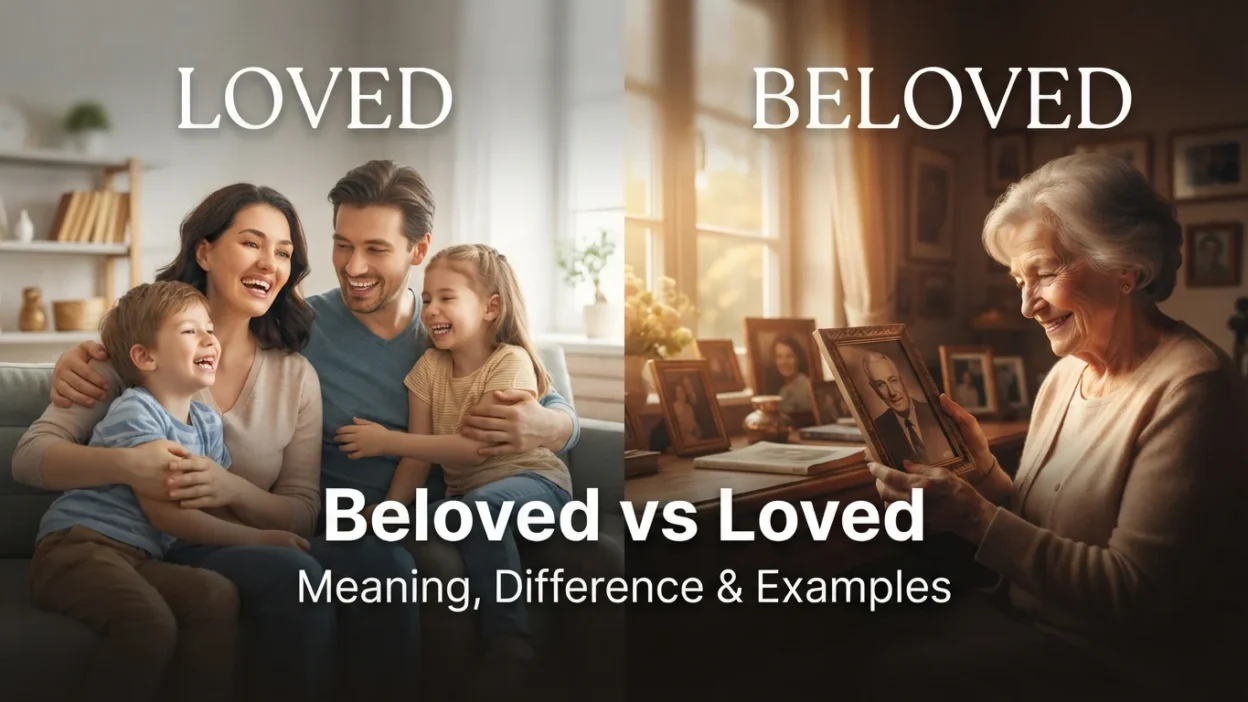
When choosing between beloved vs loved, both words describe someone or something that is deeply cared for or greatly valued. However, they are not always interchangeable. Loved is the more common and general word, while beloved is stronger, warmer, and often more expressive or formal. Understanding this small difference can help you choose the right word for personal writing, everyday conversation, stories, and formal expressions.
The word loved simply tells us that someone or something receives love. Beloved suggests that the person or thing is especially cherished, treasured, or held very dear. For example, you can say, “She is loved by her family,” but “She is a beloved member of the community” adds a stronger sense of affection and importance. The best choice depends on the context and the feeling you want to express.
Quick Answer
Loved means cared for or treated with affection, while beloved means deeply loved, cherished, or treasured. “Loved” is common in everyday English, whereas “beloved” often sounds more emotional, affectionate, literary, or formal. For example, “my loved ones” is natural, while “my beloved grandmother” expresses especially deep affection.
Why Do People Confuse Beloved and Loved?
People confuse these words because both are connected to the idea of love and affection.
The main difference is the strength and style of expression.
- Loved is broad and ordinary.
- Beloved emphasizes deep affection and special importance.
- Loved works naturally in everyday conversation.
- Beloved can sound warmer, more emotional, poetic, or formal.
- Beloved often describes someone or something that is particularly cherished.
For example:
I am loved by my family.
This simply states that your family loves you.
I am beloved by my family.
This sounds stronger and more expressive. It suggests that you are deeply cherished.
What Does “Loved” Mean?
Loved is the past tense and past participle of love.
It means that someone or something received love, affection, care, or strong positive feelings.
Examples of “Loved”
- She was loved by her parents.
- He loved his childhood home.
- The children felt loved and safe.
- This book is loved by millions of readers.
- They have always loved their teacher.
“Loved” is extremely flexible. It can describe romantic love, family affection, friendship, admiration, or strong enjoyment.
For example:
I loved that movie.
Here, loved means you enjoyed the movie very much. It does not necessarily mean emotional affection.
What Does “Beloved” Mean?
Beloved means deeply loved, greatly cherished, or very dear to someone.
It is stronger and more emotionally expressive than the basic word loved.
Examples of “Beloved”
- Her beloved grandmother passed away peacefully.
- He returned to his beloved hometown.
- The author became a beloved figure among readers.
- She kept her beloved childhood toy.
- The dog was a beloved member of the family.
“Beloved” is especially common when talking about someone or something that has a special emotional place in a person’s heart.
Beloved vs Loved: Comparison Table
| Feature | Loved | Beloved |
|---|---|---|
| Basic meaning | Received love or affection | Deeply loved or cherished |
| Emotional strength | General | Stronger and more expressive |
| Everyday use | Very common | Less common |
| Tone | Neutral to warm | Warm, affectionate, poetic, or formal |
| Can describe enjoyment? | Yes | Generally no |
| Common before a noun | Less common | Very common |
| Example | “She is loved by everyone.” | “She is a beloved teacher.” |
| Main idea | Love exists | Someone is especially cherished |
When Should You Use “Loved”?
Use loved when you simply want to say that someone or something receives or received love.
It is the natural choice for everyday situations.
Use “loved” for:
- Family relationships
- Romantic relationships
- Friendships
- General affection
- Past experiences
- Things you greatly enjoyed
- General statements about love
Examples:
He felt loved by his parents.
She loved her new job.
We loved the restaurant.
The children are loved and cared for.
Notice that loved can also mean “really enjoyed.”
When Should You Use “Beloved”?
Use beloved when you want to emphasize that someone or something is deeply cherished or especially dear.
It is particularly useful when you want a warmer or more emotional tone.
Use “beloved” for:
- A deeply cherished family member
- A deceased person remembered with affection
- A treasured place
- A highly valued pet
- A respected public or cultural figure
- Literary or emotional writing
- Formal expressions of affection
For example:
She visited her beloved hometown every summer.
The word beloved suggests that the hometown has a special emotional significance to her.
10+ Examples of Beloved and Loved
Examples with “Loved”
- She is loved by her family.
- He loved his first school.
- The baby is deeply loved by her parents.
- I loved the concert last night.
- They have always loved their old house.
- He felt loved and appreciated.
Examples with “Beloved”
- She was a beloved teacher.
- He returned to his beloved hometown.
- The family remembered their beloved grandfather.
- The dog was a beloved member of the family.
- The author created a beloved character.
- She treasured her beloved necklace.
Compare These Sentences
My grandmother was loved by everyone.
This says that everyone had affection for her.
My grandmother was beloved by everyone.
This emphasizes that she was especially cherished and held dear.
Both are grammatically correct, but beloved creates a stronger emotional impression.
Common Mistakes with Beloved and Loved
Mistake 1: Thinking They Always Mean Exactly the Same Thing
Although they are related, they have different shades of meaning.
Loved is broader, while beloved carries a stronger sense of being cherished.
Mistake 2: Using “Beloved” for Simple Enjoyment
You can say:
I loved the movie.
But saying:
I beloved the movie.
is incorrect.
Beloved is not normally used as the past tense of love.
Mistake 3: Treating “Beloved” as a Regular Verb
“Beloved” can function as an adjective and can also appear as a noun in certain contexts.
Correct:
She is my beloved sister.
Incorrect:
I beloved my sister.
The correct verb is:
I loved my sister.
Mistake 4: Using “Beloved” Everywhere
Because beloved is expressive, using it in every situation can sound unnatural.
For ordinary conversation, loved is usually the simpler choice.
What Is an Easy Memory Trick?
Remember:
Loved = received love.
Beloved = deeply cherished.
Think of beloved as “very dear and deeply loved.”
For example:
- Loved: “My parents love me.”
- Beloved: “My parents are deeply cherished by me.”
When you want a simple statement, choose loved. When you want to highlight special affection, choose beloved.
American vs British English
There is no major difference in the basic meanings of beloved and loved between American and British English.
Both varieties use loved as the common past form of love.
Both also use beloved to describe someone or something deeply cherished.
For example, these are natural in both varieties:
She is loved by her family.
He is a beloved member of the community.
The main difference is style and context, rather than American versus British grammar. Beloved may appear more frequently in literary, ceremonial, emotional, or formal language, while loved is extremely common in ordinary speech.
Similar Words
Several words are closely related to beloved and loved.
Cherished
Means deeply valued and cared for.
She kept her cherished memories.
Adored
Means loved very strongly.
The children adored their grandmother.
Dear
Means greatly valued or personally important.
He is a dear friend.
Treasured
Means considered extremely valuable or precious.
She treasured the old photograph.
Affectionate
Describes feelings or behavior that show warmth and love.
He gave his daughter an affectionate smile.
Valued
Means considered important or worthwhile.
She is a valued member of the team.
Final Verdict
Beloved and loved are both correct words, but they are used differently.
Choose loved when you want a natural, general expression of love, affection, or enjoyment. Choose beloved when you want to emphasize that someone or something is especially cherished, treasured, or deeply dear.
A simple rule is:
Loved = cared for or enjoyed.
Beloved = deeply cherished and especially dear.
Frequently Asked Questions
Is “beloved” stronger than “loved”?
Generally, yes. Beloved emphasizes deep affection and being especially cherished, while loved is a broader and more neutral expression.
Is “beloved” the past tense of “love”?
No. The past tense of love is loved. Beloved is usually an adjective meaning deeply loved or cherished.
Can I say “I beloved you”?
No. The correct expression is “I loved you” or “I love you.” “Beloved” is not normally used as the past-tense verb of love.
Is “my beloved” grammatically correct?
Yes. My beloved is a correct expression. It can refer to a person who is deeply loved and can sound romantic, affectionate, poetic, or formal depending on context.
Is “beloved” romantic?
It can be romantic, but it does not have to be. Someone can describe a parent, grandparent, pet, hometown, teacher, or cultural figure as beloved.
What is the difference between “beloved” and “dear”?
Both can express affection. Beloved usually emphasizes deep love or being cherished, while dear can mean loved, valued, familiar, or personally important.
Can “beloved” describe a place?
Yes. A person can call a place beloved when it has strong emotional importance.
They returned to their beloved village.
Which is more common: “loved” or “beloved”?
Loved is much more common in everyday English because it has many uses. Beloved is more specialized and is often chosen when the writer wants to express deeper affection or emotional importance.
Remember This
- Loved = received love or affection.
- Beloved = deeply loved and cherished.
- Loved is more common in everyday English.
- Beloved sounds more emotional, affectionate, literary, or formal.
- Loved can also describe something you greatly enjoyed.
- Beloved is not normally used as the past tense of love.
Understanding this distinction makes it easier to choose the word that matches both your meaning and your tone.
Conclusion
The difference between beloved vs loved is mainly about emphasis and tone. Loved is the ordinary and flexible word for expressing love, affection, or enjoyment. Beloved goes further by suggesting that someone or something is deeply cherished, treasured, and especially dear.
If you are writing a simple everyday sentence, loved will often be the natural choice. If you want to express strong affection or highlight the special emotional importance of a person, place, or thing, beloved can be more appropriate. Remember: loved means receiving love, while beloved means being deeply cherished.

John Tyler is a dream researcher and content writer at SleepCout, sharing insightful articles about coded dreams, dream meanings, symbolism, sleep psychology, and practical guidance to help readers understand their dreams.