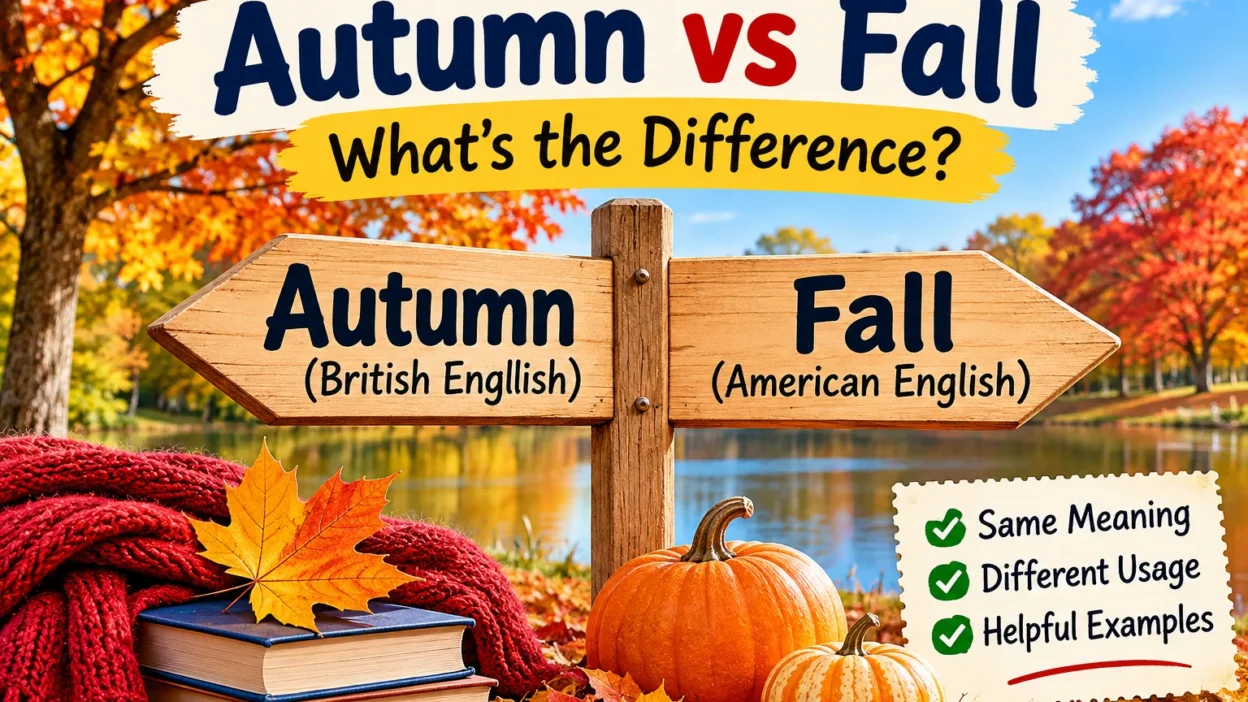
The words autumn and fall both describe the season between summer and winter. During this time, temperatures become cooler, leaves change color, and many trees lose their leaves. But if you have ever wondered if autumn and fall mean different things, you are not alone. These two words are often used in everyday conversations, books, weather reports, and seasonal descriptions.
The good news is that there is no significant difference in their meaning. Both words refer to the same season of the year. However, they are used differently depending on the variety of English and the situation. Autumn is more common in British English and is often considered slightly more formal, while fall is especially common in American English and sounds natural in everyday conversation. Understanding this difference will help you choose the right word when speaking or writing in English.
Quick Answer: Autumn vs Fall
Autumn and fall are two different names for the same season, which comes between summer and winter. Autumn is more commonly used in British English and formal writing, while fall is more popular in American English. Both words are correct, and you can use either depending on your audience and writing style.
Why Do People Confuse Autumn and Fall?
People sometimes think autumn and fall describe two different seasons because the words look and sound completely different.
However, they have exactly the same basic meaning.
The confusion usually comes from three things:
- Regional differences: British speakers generally prefer autumn, while Americans commonly use fall.
- Word origins: The two words developed from different expressions describing the seasonal changes.
- Writing styles: Autumn can sound more traditional or literary, whereas fall often feels more conversational in American English.
For example:
- British English: Autumn is my favorite season.
- American English: Fall is my favorite season.
Both sentences are grammatically correct and express the same idea.
What Does Autumn Mean?
Autumn is a noun that refers to the season between summer and winter. It is associated with cooler weather, colorful leaves, shorter days, and the transition toward winter.
The word comes from Latin autumnus, which entered English through Old French. It has been used in English for centuries.
Autumn is particularly common in British English, but it is also widely understood and used in other English-speaking countries.
Examples of Autumn in Sentences
- Autumn is my favorite time of the year.
- The trees look beautiful during autumn.
- We enjoy long walks in the autumn sunshine.
- Many leaves turn orange and yellow in autumn.
- The weather becomes cooler in autumn.
What Does Fall Mean?
Fall is a noun that refers to the same season between summer and winter. It describes the period when temperatures begin to drop and leaves fall from many trees.
The seasonal meaning of fall developed from the expression fall of the leaf or fall of the leaves. Over time, people shortened this expression to simply fall.
Today, fall is especially popular in American English and is commonly used in everyday conversations, advertisements, school calendars, and seasonal activities.
Examples of Fall in Sentences
- Fall is the best season for outdoor activities.
- The leaves change color in the fall.
- We are planning a family trip this fall.
- Fall weather is usually cool and pleasant.
- Many people enjoy pumpkin festivals in the fall.
Autumn vs Fall: Key Differences
Although autumn and fall have the same meaning, their popularity and usage vary across English-speaking regions.
| Feature | Autumn | Fall |
|---|---|---|
| Meaning | Season between summer and winter | Season between summer and winter |
| Word type | Noun | Noun |
| British English | More common | Less common |
| American English | Also used | More common |
| Tone | Often traditional or slightly formal | Often conversational |
| Origin | From Latin autumnus | From the phrase “fall of the leaves” |
| Example | Autumn is beautiful. | Fall is beautiful. |
The most important difference is regional preference, not meaning.
When Should You Use Autumn or Fall?
Choosing between autumn and fall is simple once you understand your audience.
1. Use Autumn in British English
If you are writing for British readers or following British English conventions, autumn is generally the natural choice.
Examples:
- Autumn brings cooler temperatures.
- I love walking through the park in autumn.
- The autumn leaves look wonderful.
2. Use Fall in American English
If your audience is primarily American, fall is usually the more natural choice.
Examples:
- Fall is just around the corner.
- We are going apple picking this fall.
- The fall season brings beautiful colors.
3. Use Either Word in International English
Both words are widely understood internationally. If you are communicating with an international audience, either is acceptable.
However, try to remain consistent throughout your writing.
For example, if you begin an article with autumn, continue using autumn rather than switching randomly between autumn and fall.
12 Examples of Autumn vs Fall in Sentences
Here are 12 practical examples showing how both words can be used in similar situations.
| Autumn | Fall |
|---|---|
| Autumn is a beautiful season. | Fall is a beautiful season. |
| I enjoy autumn weather. | I enjoy fall weather. |
| The leaves change color in autumn. | The leaves change color in fall. |
| We travel during autumn. | We travel during fall. |
| Autumn begins after summer. | Fall begins after summer. |
| I bought an autumn jacket. | I bought a fall jacket. |
| Autumn evenings are peaceful. | Fall evenings are peaceful. |
| The autumn festival starts tomorrow. | The fall festival starts tomorrow. |
| We planted flowers last autumn. | We planted flowers last fall. |
| Autumn brings cooler temperatures. | Fall brings cooler temperatures. |
| I love autumn decorations. | I love fall decorations. |
| The autumn season is approaching. | The fall season is approaching. |
Notice: Both versions communicate essentially the same meaning. The choice mainly depends on regional preference and context.
Common Mistakes When Using Autumn and Fall
Even though both words are easy to understand, English learners sometimes make these mistakes.
Mistake 1: Thinking They Are Different Seasons
Incorrect idea: Autumn and fall happen at different times.
Correct understanding: They are two names for the same season.
Mistake 2: Using Fall Only as a Verb
Some learners know that fall means to drop or move downward but do not realize it can also name a season.
Example:
- The leaves fall from the trees. (Verb)
- Fall is my favorite season. (Noun)
Both uses are correct.
Mistake 3: Assuming Autumn Is Incorrect in American English
Autumn is perfectly acceptable in American English. Fall is simply more commonly used.
Mistake 4: Assuming Fall Is Incorrect in British English
British speakers understand fall, even though autumn is generally preferred in everyday British usage.
Mistake 5: Switching Between the Words Without a Reason
Using both words in one article is not grammatically wrong. However, consistent usage makes writing clearer and more polished.
Easy Memory Trick: How to Remember Autumn vs Fall
Here is a simple way to remember the difference:
- Autumn = British preference
- Fall = American preference
Think of the word fall as a reminder of falling leaves. This makes it easy to connect the word with the season.
Remember that both words describe the same time of year. You do not need to learn two separate seasonal meanings.
Autumn vs Fall in American and British English
The biggest difference between autumn and fall is their popularity in different varieties of English.
British English
Old wooden bench in the autumn park under colorful autumn trees with golden leaves.
In British English, autumn is the standard and more commonly preferred term.
Examples:
- Autumn is approaching.
- The autumn weather is lovely.
- We usually go on holiday in autumn.
American English
Fall Foliage Near Me? Here Are the Best Places to Check It Out!
In American English, fall is the more common everyday term.
Examples:
- Fall is almost here.
- I love the fall colors.
- We have a vacation planned for the fall.
Which Word Should English Learners Choose?
If you are learning British English, use autumn more often.
If you are learning American English, use fall more often.
Neither word is wrong, and speakers of both varieties understand them.
Similar Words Related to Autumn and Fall
Learning related seasonal vocabulary can help you describe the weather and nature more naturally.
| Word | Meaning |
|---|---|
| Summer | The warmest season of the year in many regions |
| Winter | The coldest season of the year in many regions |
| Spring | The season between winter and summer |
| Foliage | The leaves of plants and trees |
| Harvest | The process of gathering crops |
| Chilly | Uncomfortably or pleasantly cold |
| Crisp | Fresh and pleasantly cool |
| Seasonal | Related to a particular season |
| Equinox | The time when day and night are nearly equal in length |
| Deciduous | Describes trees that shed their leaves seasonally |
These words are useful when discussing seasonal weather, outdoor activities, and changes in nature.
Final Verdict: Autumn or Fall?
So, which word should you use?
The answer is simple: both autumn and fall are correct.
Choose autumn when writing in British English or when you want a slightly more traditional or formal tone. Choose fall when communicating with an American audience or using everyday American English.
There is no difference in their basic meaning. Both words describe the season between summer and winter.
Frequently Asked Questions (FAQs)
1. Are autumn and fall the same thing?
Yes. Autumn and fall are two different names for the same season. Both describe the period between summer and winter when temperatures become cooler and many trees lose their leaves.
2. Is autumn British or American English?
Autumn is commonly associated with British English, where it is the standard term for the season. However, Americans also use autumn, particularly in formal, literary, and descriptive contexts.
3. Is fall American or British English?
Fall is most commonly associated with American English. Americans frequently use it in everyday conversations, seasonal descriptions, school calendars, and weather reports. British speakers understand it but generally prefer autumn.
4. Why do Americans say fall instead of autumn?
The word fall developed from the expression “fall of the leaves,” which described the seasonal dropping of leaves from trees. It became a shorter, commonly used name for the season in North America.
5. Which word is more formal, autumn or fall?
Autumn is often perceived as slightly more formal or literary, while fall is generally more conversational in American English. However, both words are acceptable in formal and informal writing.
6. Can I use autumn and fall interchangeably?
Yes. You can use autumn and fall interchangeably when referring to the season. However, maintaining consistency within a piece of writing is recommended, especially when targeting a particular English-speaking audience.
7. When does autumn or fall begin?
In the Northern Hemisphere, astronomical autumn begins around September 22 or 23, while in the Southern Hemisphere, it begins around March 20 or 21. Meteorological autumn begins on September 1 in the Northern Hemisphere and March 1 in the Southern Hemisphere.
Remember This
- Autumn and fall mean the same season.
- Autumn is more common in British English.
- Fall is more common in American English.
- Autumn often sounds slightly more traditional or formal.
- Fall comes from the expression “fall of the leaves.”
- Both words are grammatically correct.
Conclusion
The difference between autumn and fall is mainly about regional English usage, not meaning. Both words describe the beautiful season between summer and winter, when the weather becomes cooler and leaves change color or fall from trees. Autumn is generally preferred in British English, while fall is more popular in American English.
As an English learner, you do not need to worry about choosing the wrong word. Both are correct and widely understood. Simply consider your audience, follow the English variety you are using, and stay consistent. Once you understand this small distinction, using autumn and fall correctly becomes easy.

John Tyler is a dream researcher and content writer at SleepCout, sharing insightful articles about coded dreams, dream meanings, symbolism, sleep psychology, and practical guidance to help readers understand their dreams.