
The phrase “looking forward to seeing you” is a natural and grammatically correct expression used when you are excited about or expecting to meet someone in the future. It is especially common in emails, messages, invitations, professional communication, and everyday conversations. For example, you can say, “I’m looking forward to seeing you tomorrow.”
Many English learners wonder why “seeing” is used instead of “see” after “looking forward to.” The reason is that “to” functions as a preposition in the expression “look forward to,” so it should be followed by a noun, pronoun, or -ing form (gerund). Therefore, “I’m looking forward to seeing you” is correct, while “I’m looking forward to see you” is incorrect in standard English.
Quick Answer
“Looking forward to seeing you” is correct English. It means that you are happy, excited, or pleased about meeting someone in the future. The word “seeing” is correct because “to” is a preposition in the phrase “look forward to.” Use “looking forward to see you” only as a common learner error, not as standard grammar.
Why Do People Confuse It?
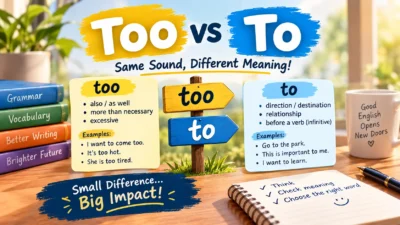
The confusion usually comes from the word “to.”
English learners often learn that “to + verb” creates an infinitive:
- to see
- to meet
- to visit
- to talk
However, “look forward to” is a fixed expression in which to is a preposition, not an infinitive marker.
When to is a preposition, it can be followed by:
- a noun: I look forward to the meeting.
- a pronoun: I look forward to it.
- a gerund: I look forward to seeing you.
That is why “looking forward to seeing you” is grammatically correct.
What Does “Looking Forward” Mean?
Looking forward to means feeling happy or excited about something that is expected to happen in the future.
For example:
I’m looking forward to the weekend.
This means you are happy about the upcoming weekend.
Similarly:
I’m looking forward to seeing you.
This means you are pleased or excited about meeting the person.
The First Word: “Looking”
Looking is the -ing form of “look.”
In the expression “look forward to,” the word “look” does not refer to physically using your eyes. Instead, the complete phrase has a special meaning: to anticipate something positively.
Examples:
- I look forward to your reply.
- She looks forward to the holidays.
- We are looking forward to meeting you.
- They look forward to working with your team.
The form changes depending on the tense and subject:
- I look forward to seeing you.
- I’m looking forward to seeing you.
- She looks forward to seeing you.
- We are looking forward to seeing you.
The Second Word: “Seeing”
Seeing is the gerund form of see.
Because “to” is a preposition in “look forward to,” the following verb should take the -ing form.
Correct:
I’m looking forward to seeing you.
Incorrect:
I’m looking forward to see you.
The same pattern appears with many other verbs:
- looking forward to meeting
- looking forward to hearing
- looking forward to talking
- looking forward to visiting
- looking forward to working
Looking Forward to Seeing You: Comparison Table
| Expression | Correct? | Meaning |
|---|---|---|
| Looking forward to seeing you | ✅ Yes | Excited about meeting you |
| Looking forward to see you | ❌ No | Incorrect standard grammar |
| I look forward to seeing you | ✅ Yes | More formal/professional |
| I’m looking forward to seeing you | ✅ Yes | Natural and friendly |
| Looking forward seeing you | ❌ No | Missing “to” |
| I look forward to your visit | ✅ Yes | Anticipating your visit |
| I’m excited to see you | ✅ Yes | Another natural expression |
When Should You Use “Looking Forward to Seeing You”?
1. In a Friendly Message
You can use it when talking to a friend or family member.
I’m looking forward to seeing you this weekend.
2. In a Professional Email
The expression is also very common in workplace communication.
I’m looking forward to seeing you at the conference.
For a more formal tone, you can use:
I look forward to seeing you at the meeting.
3. After Making Plans
If you have already arranged to meet someone, the phrase works naturally.
We’re meeting on Friday, and I’m looking forward to seeing you.
4. Before an Event
You can express anticipation before a wedding, conference, party, or other event.
We’re looking forward to seeing you at the wedding.
10+ Examples of “Looking Forward to Seeing You”
Here are practical examples you can use in everyday English:
- I’m looking forward to seeing you tomorrow.
- I’m looking forward to seeing you again.
- We’re looking forward to seeing you this weekend.
- She is looking forward to seeing you at the party.
- I look forward to seeing you at the meeting.
- He’s really looking forward to seeing you.
- I’m looking forward to seeing you soon.
- We look forward to seeing you at the conference.
- I’m looking forward to seeing you after the holidays.
- My family is looking forward to seeing you.
- I’m looking forward to seeing everyone next week.
- We’re looking forward to seeing you in person.
Common Mistakes
Mistake 1: “Looking forward to see you”
I’m looking forward to see you.
I’m looking forward to seeing you.
The verb after prepositional to takes the -ing form.
Mistake 2: Forgetting “to”
I’m looking forward seeing you.
I’m looking forward to seeing you.
The phrase is look forward to, so “to” must be included.
Mistake 3: Using “looking forward” Without the Correct Structure
I looking forward to seeing you.
I am looking forward to seeing you.
Because looking is an -ing form, you normally need the appropriate form of be in the present continuous construction.
Mistake 4: Confusing “See” and “Seeing”
Both see and seeing can be correct in English, but they are used in different grammatical structures.
I want to see you.
But:
I look forward to seeing you.
Memory Trick
Remember this simple rule:
Look forward to + noun / pronoun / -ing verb
Think:
Examples:
- I look forward to the meeting.
- I look forward to it.
- I look forward to seeing you.
- I look forward to meeting everyone.
A useful shortcut is:
“Look forward to” → use -ing after it.
American vs. British English
There is no important grammatical difference between American and British English in this expression.
Both commonly use:
I’m looking forward to seeing you.
and:
I look forward to seeing you.
The phrase is understood naturally in both varieties of English.
The main difference may be related to tone and context, rather than grammar. “I look forward to seeing you” can sound slightly more formal, especially in professional correspondence, while “I’m looking forward to seeing you” often feels warmer and more conversational.
Similar Words and Expressions
Several expressions can communicate a similar idea.
I’m excited to see you
This is friendly and enthusiastic.
I’m excited to see you tomorrow.
I can’t wait to see you
This is more informal and strongly enthusiastic.
I can’t wait to see you again!
I’m eager to see you
This sounds somewhat more formal.
I’m eager to see you at the event.
I’m happy to see you
This can describe how you feel when meeting someone, rather than anticipation before the meeting.
I’m always happy to see you.
I look forward to meeting you
This is especially common when meeting someone for the first time.
I look forward to meeting you next week.
Final Verdict
“Looking forward to seeing you” is completely correct and natural English.
The key grammar point is that “to” in “look forward to” is a preposition, so it should be followed by a noun, pronoun, or gerund.
Therefore:
I’m looking forward to seeing you.
I’m looking forward to see you.
For formal emails, “I look forward to seeing you” is also an excellent choice.
Frequently Asked Questions
Is “looking forward to seeing you” grammatically correct?
Yes. “Looking forward to seeing you” is grammatically correct and means that you are happy or excited about meeting someone in the future.
Is it correct to say “looking forward to see you”?
No. In standard English, the correct form is “looking forward to seeing you.” The “to” in “look forward to” is a preposition, so it is followed by “seeing.”
Is “I look forward to seeing you” formal?
Yes. “I look forward to seeing you” is natural in professional emails, business communication, invitations, and formal messages.
Is “I’m looking forward to seeing you” informal?
It is natural in both casual and professional situations. It generally sounds a little warmer and more conversational than “I look forward to seeing you.”
Can I say “looking forward seeing you”?
No. The correct expression includes to:
I’m looking forward to seeing you.
What is the difference between “look forward to seeing” and “look forward to see”?
Only “look forward to seeing” is correct in standard English. “Look forward to see” incorrectly treats “to” as an infinitive marker.
Can I use “looking forward to seeing you” in an email?
Yes. It is very common in emails. For example:
Thank you for your message. I’m looking forward to seeing you next week.
Remember This
Look forward to + noun, pronoun, or -ing form.
So remember:
I’m looking forward to seeing you.
I look forward to seeing you.
I’m looking forward to see you.
The easiest rule is: after “look forward to,” use an -ing verb when another verb follows.
Conclusion
“Looking forward to seeing you” is a correct, natural, and widely used English expression. It communicates positive anticipation about meeting someone and works well in personal conversations, emails, invitations, and professional settings.
The most important grammar point is understanding that “to” is a preposition in “look forward to.” That is why we say “looking forward to seeing,” not “looking forward to see.” Once you remember this pattern, similar expressions such as “looking forward to meeting you” and “looking forward to hearing from you” become much easier to use correctly.

John Tyler is a dream researcher and content writer at SleepCout, sharing insightful articles about coded dreams, dream meanings, symbolism, sleep psychology, and practical guidance to help readers understand their dreams.