
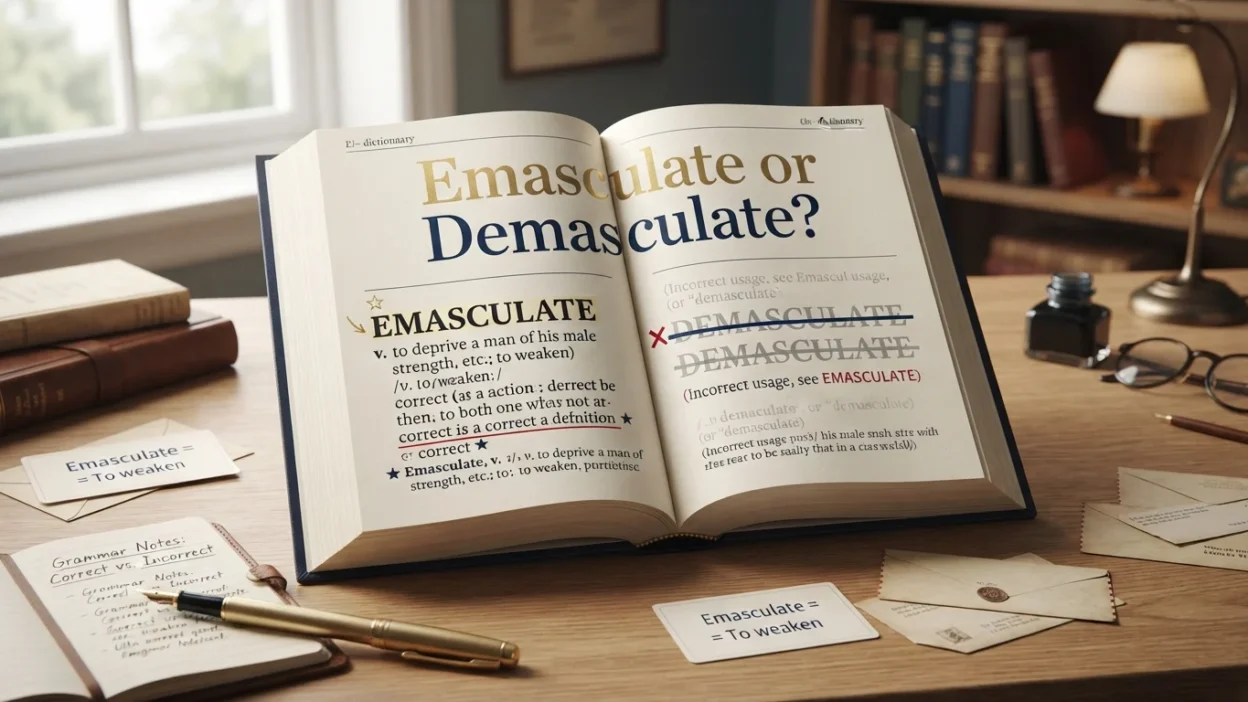
If you are wondering if the correct word is “emasculate” or “demasculate,” the standard English word is emasculate. Emasculate is a real English verb meaning to deprive a man of his male power, strength, or confidence, and it can also mean to make something weaker or less effective. Demasculate is not a standard word in modern English and is generally considered an incorrect formation. Knowing the difference can help you avoid spelling mistakes and choose the right word in formal writing.
Quick Answer
Emasculate is the correct and established English word. It can mean to castrate a male, make someone feel less masculine or powerful, or weaken something. Demasculate is not standard English and should normally be avoided. Use emasculate when you need this meaning.
Why Do People Confuse It?
The confusion probably comes from the way English creates words with prefixes.
The prefix de- often means “remove,” “reduce,” or “reverse,” so demasculate may seem logical. However, English does not create every word simply by adding a prefix to another word.
The established word is emasculate, which comes from Latin emasculare, meaning “to deprive of masculinity.”
So, although demasculate may look understandable, it is not the normal standard-English choice.
What Does “Emasculate” Mean?
Emasculate is a verb with several related meanings.
It can mean:
- To castrate a male
- To deprive someone of masculine power or confidence
- To make someone feel weak, powerless, or less effective
- To weaken something substantially
Examples
- The procedure was intended to emasculate the animal.
- He felt emasculated after being publicly humiliated.
- The new restrictions could emasculate the organization.
- Critics argued that the changes would emasculate the legislation.
The word can therefore be used literally or figuratively.
What Does “Demasculate” Mean?
Demasculate is not a standard English word.
You may occasionally encounter it because people assume that de- + masculine should produce demasculate. However, standard dictionaries generally use emasculate for the intended meaning.
Instead of writing:
The experience demasculated him.
Write:
The experience emasculated him.
If you mean that someone became less confident or powerful, you could also say:
- weakened him
- undermined his confidence
- made him feel powerless
- diminished his sense of masculinity
Emasculate vs Demasculate: Comparison Table
| Word | Standard English? | Meaning | Recommended? |
|---|---|---|---|
| Emasculate | Yes | To castrate, weaken, or deprive someone of masculine power or confidence | ✅ Yes |
| Demasculate | No, not standard | Intended to mean something similar to emasculate | ❌ Avoid |
| Weaken | Yes | To make less strong or effective | ✅ Yes |
| Undermine | Yes | To weaken confidence, authority, or effectiveness | ✅ Yes |
When Should You Use “Emasculate”?
Use emasculate when you need a formal word describing the removal or weakening of masculine power, authority, confidence, or effectiveness.
Physical or Literal Meaning
Historically and literally, emasculate can refer to castration or the removal of male reproductive organs.
Example:
The procedure effectively emasculated the animal.
Figurative Meaning
In everyday writing, emasculate is often used figuratively.
Example:
The criticism made him feel emasculated.
It can describe someone who feels that their confidence, authority, strength, or traditional sense of masculinity has been undermined.
Meaning “To Weaken”
The word can also describe organizations, laws, plans, or systems.
Example:
The amendments could emasculate the new policy.
Here, the word does not refer to masculinity literally. It means to make something weaker or less effective.
10+ Examples of “Emasculate”
- The defeat left him feeling emasculated.
- He worried that asking for help would make him appear emasculated.
- The new rules could emasculate the committee.
- The changes were criticized for emasculating the original proposal.
- Public humiliation can make a person feel emasculated.
- The reforms may emasculate the agency’s authority.
- He believed the criticism was intended to emasculate him.
- The organization was gradually emasculated by the restrictions.
- The character feels emasculated after losing his position.
- The proposed changes would emasculate the law.
- He did not want his failure to make him feel emasculated.
- The novel explores themes of masculinity and emasculation.
Common Mistakes
Mistake 1: Writing “Demasculate”
❌ The experience demasculated him.
✅ The experience emasculated him.
Mistake 2: Assuming “Demasculate” Is the Opposite of “Masculate”
English vocabulary does not always work through perfectly symmetrical word formation.
Even though demasculate might appear logical, emasculate is the established word.
Mistake 3: Using “Emasculate” When “Weaken” Is Clearer
“Emasculate” can sound strong or emotionally charged when used figuratively.
For example:
The changes weakened the organization.
This may be clearer than:
The changes emasculated the organization.
Choose the word that best communicates your intended meaning.
Memory Trick
Remember:
E = Emasculate = Established English
Think:
Emasculate is the Existing standard word.
If you are tempted to write demasculate, stop and choose emasculate instead.
American vs British English
There is no major American-versus-British spelling difference between emasculate and emasculate.
The word is used in both American and British English.
The important distinction is not geographical. It is between the standard word emasculate and the nonstandard or uncommon formation demasculate.
Similar Words
Several words can express related ideas, depending on context.
Weaken
Means to make something less strong or effective.
The criticism weakened his confidence.
Undermine
Means to gradually weaken someone’s confidence, authority, or position.
The repeated criticism undermined his authority.
Castrate
Has a specific literal meaning involving the removal of the male reproductive organs.
The animal was castrated by a veterinarian.
Humiliate
Means to make someone feel ashamed or embarrassed.
The public criticism humiliated him.
Disempower
Means to take away someone’s power, authority, or ability to act.
The new policy could disempower local officials.
These words overlap with emasculate in some contexts, but they are not exact synonyms in every sentence.
Final Verdict
Emasculate is the correct standard English word. Demasculate should generally be avoided in formal, academic, professional, and everyday writing.
Use emasculate when you mean to deprive someone of masculine power or confidence, castrate a male, or figuratively weaken something’s strength or effectiveness.
If your intended meaning is simply “make weaker,” words such as weaken, undermine, or disempower may sometimes be more precise.
Frequently Asked Questions
Is “demasculate” a correct word?
Demasculate is not a standard English word. If you mean to deprive someone of masculine power or to weaken something, use emasculate.
What is the correct word: emasculate or demasculate?
The correct standard word is emasculate. It is an established English verb with both literal and figurative meanings.
What does emasculate mean?
Emasculate can mean to castrate a male, make someone feel less masculine or powerful, or weaken something so that it becomes less effective.
Can emasculate describe a woman?
The word is traditionally associated with removing or weakening masculine qualities. In figurative use, it can describe a person or situation being deprived of strength, authority, or effectiveness, but context matters.
Is emasculate a negative word?
It can carry a negative or emotionally sensitive meaning, especially when describing a person’s masculinity, confidence, or sense of power. When the intended meaning is simply “make weaker,” weaken may be a more neutral choice.
What is the noun form of emasculate?
The noun is emasculation.
Example:
The story explores his feelings of emasculation.
What is another word for emasculate?
Depending on context, alternatives include weaken, undermine, disempower, humiliate, and castrate. These words have different meanings, so choose according to the context.
Remember This
Emasculate = correct standard English
Demasculate = avoid
When in doubt, remember that emasculate is the established English word.
Conclusion
The difference between emasculate and demasculate is straightforward once you know which form English actually uses. Emasculate is the standard verb and can describe castration, loss of masculine power or confidence, or the weakening of something’s effectiveness.
Although demasculate may look like a logical word, it is not the normal standard-English choice. For clear and correct writing, use emasculate, or choose a more precise alternative such as weaken, undermine, or disempower when appropriate.

John Tyler is a dream researcher and content writer at SleepCout, sharing insightful articles about coded dreams, dream meanings, symbolism, sleep psychology, and practical guidance to help readers understand their dreams.